.jpg)
From Catalogs to Algorithms: How AI Is Reshaping the Way We Shop

Theresa Wood
&
.jpg)
No items found.
As someone who has spent decades in media and traffic for a range of brands, I’ve experienced the shift from broadcast to digital, and now to AI. I’ve watched the consumer journey evolve at every stage.
Back in the ’80s, shopping meant circling items in a Sears catalog, planning weekend mall trips, and standing in line with paper coupons. Today, it’s instant, personalized, and shaped by algorithms that anticipate what we want before we even search. As an avid shopper myself, it’s been fascinating to see just how dramatically behavior has changed.
What’s happening now with AI is a fundamental reset to shopper behavior.
AI Is Reshaping Product Discovery and Decision-Making
AI isn’t just changing how people search for brands or products, it’s changing how they decide.
AI-powered platforms like Google’s AI Overviews and Microsoft Copilot are reshaping how people discover products. According to Sales Force, nearly 40% of consumers are already using AI for product discovery, and adoption is accelerating across every age group.
In fact, Capgemini surveyed 12,000 consumers over the age of 18 in 12 countries across North America, Europe, and Asia-Pacific in late 2024 and found that over half of consumers have started replacing traditional search with AI tools for recommendations.
All this to say, catalogs are long gone, and even browsing a retail site may become obsolete.
Shoppers are increasingly presented with synthesized answers, and they trust them. If your brand isn’t included in those AI generated responses, you’re not just losing web traffic, you’re missing the moment decisions are made.
How AI Is Collapsing the Traditional Customer Journey
For years, marketers relied on a predictable funnel:
search → click → compare → decide → purchase. Today, that journey is compressed into something much shorter.
Paz.ai found that nearly 74% of consumers now use AI at some point in their shopping journey, and many rely on it to research, compare, and narrow choices before ever visiting a site.
Another study by digiday found 56% of shoppers use AI to compare prices and find deals, while 47% use it to summarize reviews.
The shopper-research still happens, but now it’s happening inside AI tools.
Why AI-Driven Traffic Converts Better Than Search
Generative AI is acting as a filter for shoppers, curating and surfacing only what it deems most relevant to each user. Digital Applied found that in 2026 over 60% of Google searches end without a click, as users get answers directly from search or AI-generated summaries.
But the traffic that does come through is more valuable:
- AI-referred visitors convert significantly better, Exposure Ninja reporting up to 14% vs ~3% from traditional search
- In some cases, like Paz.ai found, they’re 38% more likely to complete a purchase
They’re not browsing, they’re ready to act.
How AI Is Redefining Search Visibility
This shift has driven the rise of Answer Engine Optimization (AEO). Instead of optimizing search engine rankings (SEO), brands now need to ensure their content can be understood and used by AI systems, because AI doesn’t just index content, it synthesizes it.
And that matters in a world where:
- AI-driven traffic to retail sites has surged up to 4,700% year over year, according to 2026 Capital One Shopping Research
- And billions of AI-driven queries now influence shopping decisions daily, according to Paz.ai
Visibility is no longer about position; it’s about inclusion and things are moving fast.
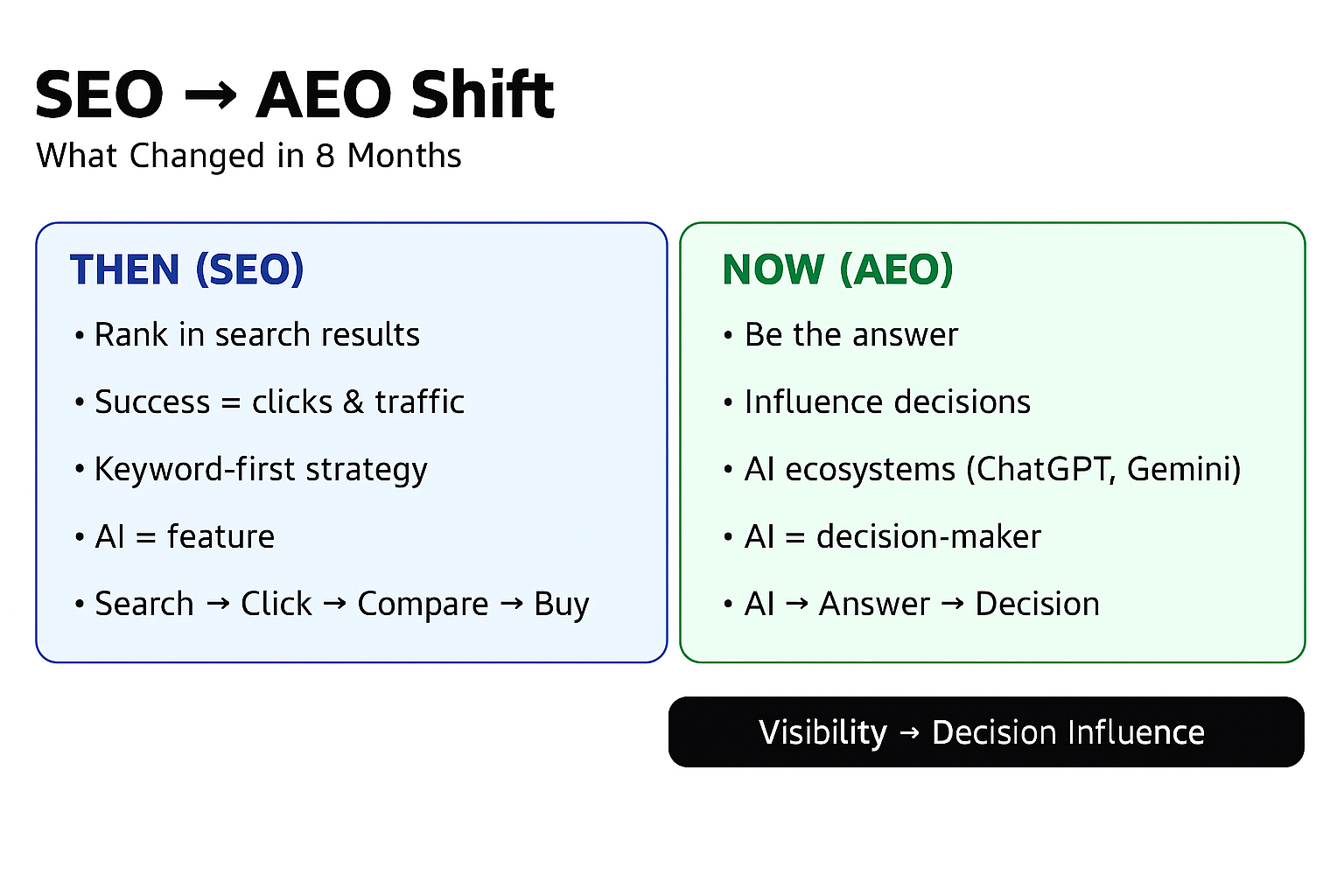
The Rise of AI Shopping Assistants and Decision Engines
Search is only part of the shift. A broader ecosystem of AI agents is emerging: AI agents have become the new gatekeepers.
Platforms like ChatGPT, Perplexity, and Gemini now act as shopping advisors by aggregating products, comparing options, and recommending outcomes. These systems are early examples of agentic AI: technology that not only assists but acts on behalf of the user.
It’s clear that consumers want speed, relevance, and simplicity, and AI delivers. Capital One Shopper Research reported in May 2026:
- 63% want to shop with generative AI assistance
- 77% say AI helps them make faster decisions
At the same time, retailers are building their own assistants and even enabling AI-driven checkout experiences.
How AI is Removing Friction From the Shopping Experience
At its core, AI is about efficiency. It removes the need to dig, compare, and interpret. It does that upfront. Typing “flat white mules with gold hardware” is increasingly replaced by simply taking a photo. AI is streamlining the entire journey:
- Tools like Google Lens allow shoppers to find those desired shoes instantly from a photo
- Smart fitting rooms suggest sizes, colors, and accessories in real time
- In-store recognition can trigger personalized offers via mobile apps
Even Adobe found that shoppers arriving from AI sources are more engaged and spend significantly longer on-site.
The Blurred Lines Between Physical and Digital Shopping
As AI removes friction, it also blurs the line between digital and physical retail. Today’s experience is “phygital”, a seamless blend of both. Social driven and instant shopping have boosted and even created viral “must have” items like Dubai chocolate, NeeDohs and various beauty products, through one-click purchases from content. Discovery is happening in-feed, and conversion can be immediate.
Consumers have already made the shift according to Capital One Shopping Research:
- 91% of shoppers now engage across multiple channels
- They interact with brands across an average of 11 touchpoints before buying
- Omnichannel shoppers spend 16% more per order
Examples are everywhere:
- Nike connects app and store
- Walmart, Etsy and Shopify have partnered with OpenAI to use ChatGPT’s instant checkout
- Sephora blends profiles with in-store consultations
- Amazon eliminates checkout entirely
Now, consumers expect brands to keep up with their shopping behavior
Why Most Retail Content Isn’t AI-Ready
Despite rapid adoption, much retail content still isn’t built for AI.
This creates a major gap: while consumers are already using AI to shop, many brands still lack structured, machine-readable content. If AI can’t interpret your content, it won’t recommend it.
How Retail Brands Should Adapt to AI-Driven Shopping
To stay competitive, brands need to rethink how they show up.
- Structure content for AI (not just humans)
- Expand visibility beyond owned channels
- Build for AI-to-AI interactions
- Realize that AI is useful, but it must earn trust
Some brands are already getting ready for this AI-driven landscape. Demand Sage found:
- 89% of retailers are using or testing AI today
- And those that adopt it are seeing up to 20% revenue increases
The Future of Shopping
AI is increasingly transforming not only how consumers find and buy products, but how they decide what they are buying. Retail brands can’t rely on simply being found in Google or showing up in social search, they need to be understood, trusted, and chosen by the systems shaping decisions in real time - AI.
And for fellow Gen X and retro fans, take heart: the past is back. Acid-wash jeans, jelly shoes, and vinyl are resurging, along with curated discovery, but now in digital form. What once took browsing racks or catalogs now surfaced instantly, often before we even realize we want it.
Stay ahead of evolving consumer behavior and ensure your brand reaches today’s shoppers. Connect with Brandience, a retail marketing agency built to help you stay visible, relevant, and competitive in the future of shopping. Connect with us today.
About the Author:
Theresa Wood, Sr. Traffic Operations Manager at Brandience, is a seasoned media and marketing professional with more than 30 years of experience across music research, continuity, direct marketing, focus group operations, auditing, print buying, and broadcast radio board operations. Known for her versatility and attention to detail, she brings a deep understanding of media workflows and creative production to every project. Her career is defined by reliability, cross-disciplinary expertise, and a commitment to elevating the quality and efficiency of the work behind the scenes. Connect with Theresa: https://www.linkedin.com/in/theresa-wood-90b937247/

.jpg)

.jpg)
.jpg)